


Inclement weather protocol
The safety of our players, parents, coaches, and other volunteers is paramount in any weather situation. DC Soccer Club recognizes that severe weather experienced while on fields training (including, but not limited to, lightning, extreme heat, and extreme cold can affect player safety, and the club is committed to implementing safe practices to minimize such risk.
DC Soccer Club's Inclement Weather Policy is based on guidelines set forth by U.S. Soccer in conjunction with data provided by WeatherBug, a full-service mobile and online weather application. This policy provides the basis for changes or cancellations to DC Soccer Club activities based on actual or potential severe weather conditions.
DC Soccer Club staff will follow this policy when determining whether club trainings, tryouts, or other events should be modified or cancelled due to actual or potential extreme weather conditions.
This policy applies to training sessions, camps, clinics, tryouts, games and other activities over which DC Soccer Club staff have governance authority.
For Travel league games and tournaments, the relevant league or the referee is responsible for cancelling for weather reasons.
LIGHTNING AND/OR THUNDER
- If lightning is seen OR thunder is heard → Activity shall be immediately suspended.
- Activity may not resume until 30 minutes have passed since the last lightning or thunder occurrence.
- If lightning is detected within 10 miles on the WeatherBug app → Activity shall cease immediately.
- Safe shelter is required (definition below).
Lightning and severe weather pose a threat to player health and safety. According to the National Weather Service (NWS), there is no safe place outside when thunderstorms are in the area, and if you hear thunder, you are likely within striking distance of the storm. In consideration of this advice, DC Soccer Club policy is as follows:
If a coach, manager, parent/guardian, athlete, or other individual sees lightning, or hears thunder, that person shall immediately notify the coach, and the coach is required to:
- Suspend the outdoor activity; and
- Direct all players to seek a safe shelter* location for at least 30 minutes from the last time lighting is seen or thunder is heard.
Coaches and managers should download the free WeatherBug App lightning detector app, which may help track when lighting might be near. Anytime the app denotes lightning within ten (10) miles, all outdoor activities should cease immediately.
Safe Shelter: According to the NWS, safe shelter is either a substantial building (one with plumbing and wiring such as a home, school, church, office building, indoor concourse or recreation center) or a fully enclosed metal-topped vehicle such as a hard-topped car, minivan, bus, etc. Unfortunately, many of the fields used by DC Soccer Club do not have access to substantial buildings for safe shelter. Therefore, while DC Soccer Club coaches, managers, and management have the best intentions for the safety of our players, parents/guardians are reminded that they are ultimately responsible for ensuring players have access to a safe vehicle during outdoor activities.
Parents/guardians should ensure that a responsible person with a safe vehicle remains at the field if/when there is a risk of severe weather forming.
Other Possible Reasons for Schedule Changes or Cancellation
At their discretion, DC Soccer Club staff may cancel practice, including, but not limited to, individual team trainings in the winter months. Any DC Soccer Club club-wide decision about field use supersedes any coach’s decision. Some reasons coaches or DC Soccer Club staff might cancel scheduled activities include, but are not limited to:
- Frozen Surface: If the playing surface is frozen and/or contains blocks of snow and/or ice, activities may be cancelled.
- Severe Flooding and Road Closures: In the event of severe flooding and road closures, activities may be cancelled.
Field Closures
DC Soccer Club uses fields managed and operated by the DC Department of Parks & Recreation (DPR), Montgomery County, schools, and other private organizations and will follow the operating policies and procedures established by each institution with respect to severe weather. Playing on a field that has been closed by the field owner/manager is strictly prohibited and is considered a violation of DC Soccer Club policy.
Notifications and Communication
DC Soccer Club staff will make best efforts to communicate modifications and cancellations ninety (90) minutes in advance of a scheduled activity, in accordance with the above policies; however, staff may cancel activities, should fields be closed or weather conditions change and present safety risks to participants prior to or during scheduled activities.
DC Soccer Club will make best efforts to communicate cancellations by sending emails/alerts via the PlayMetrics platform to affected players, coaches, managers, and/or teams.
For DC fields managed by DPR, participants can sign up for email and text alert notifications.
Policy Enforcement
Any coach who does not follow the Severe Weather Policy will be in violation of the Coach’s Code of Conduct and subject to disciplinary action. Any parent/guardian who does not adhere to this policy will be considered in violation of the DC Soccer Club Parent/Guardian Code of Conduct and/or subject to disciplinary action. Any player who does not adhere to this policy will be in violation of the DC Soccer Club Player Code of Conduct, which may result in disciplinary action.
Additional Weather Resources
Cold Weather Guidelines
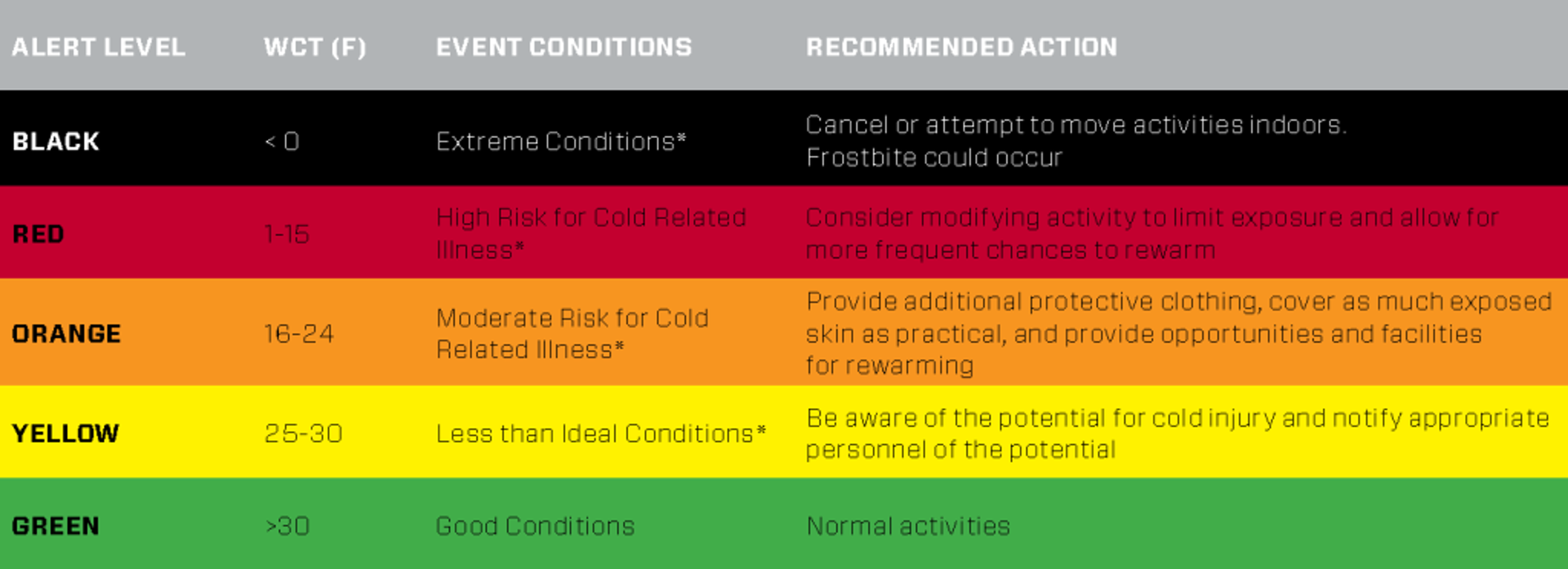
- Wind Chill Temperature Index chart shall govern decisions.
- Green/Yellow/Orange → Practice permitted.
- Red/Black → Practice modified or cancelled.
- Wind Chill Advisory or Warning → All outdoor activities cancelled.
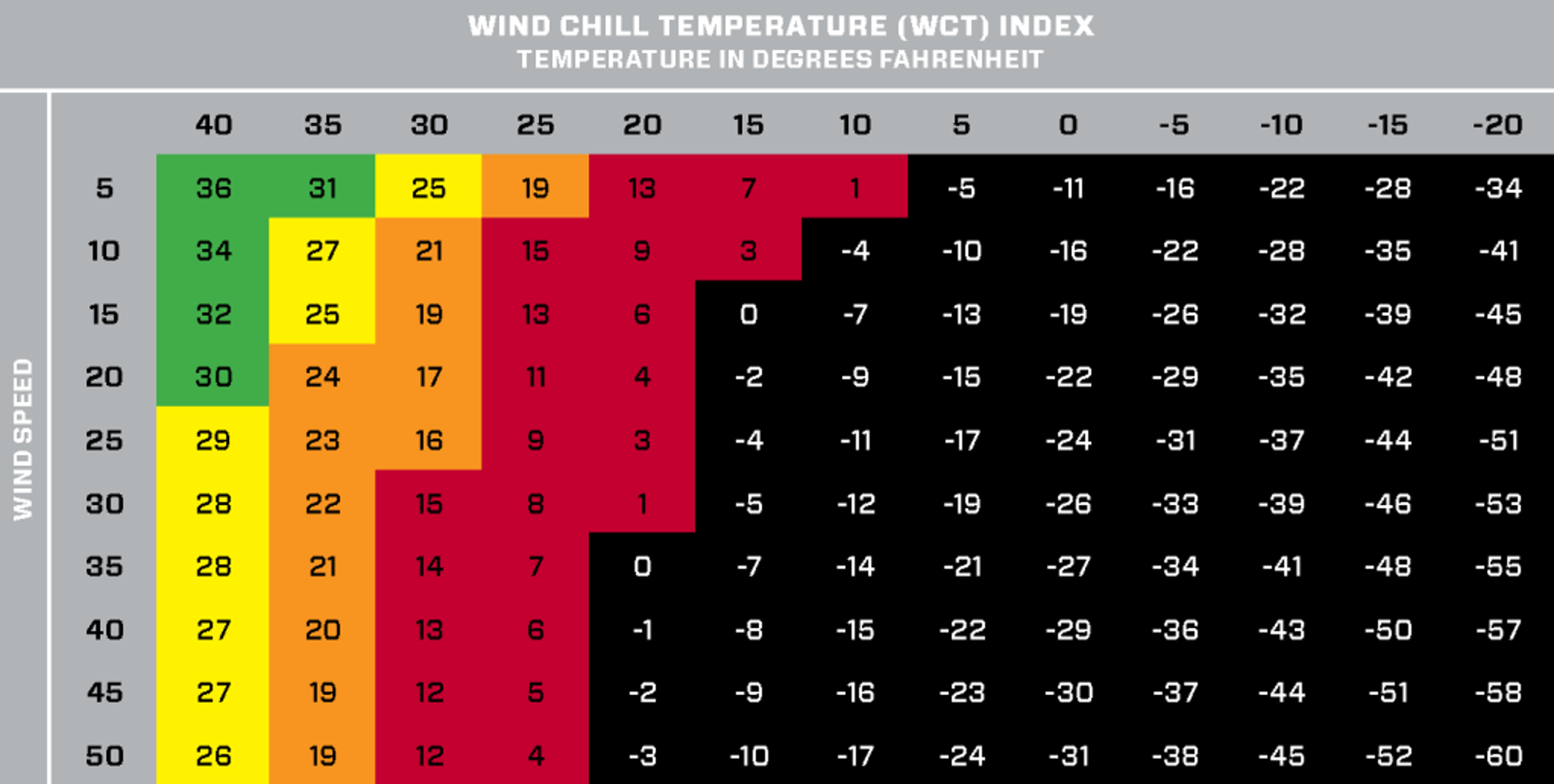
- DC Soccer Club staff will use Wind Speed and Temperature provided by the WeatherBug App to determine Wind Chill Temperature Index (WCT) on the US Soccer chart.
US Soccer prepared this guide for coaches, referees and players for training or playing in colder climates. Additionally, it serves as a guide for games and player safety during extreme temperature conditions. The information provided is not a substitute for medical or professional care, and you should not use the information in place of a visit, consultation or the advice of your physician or other healthcare provider. For specific questions and concerns, please consult your health care provider or physician.
Dress for the Cold
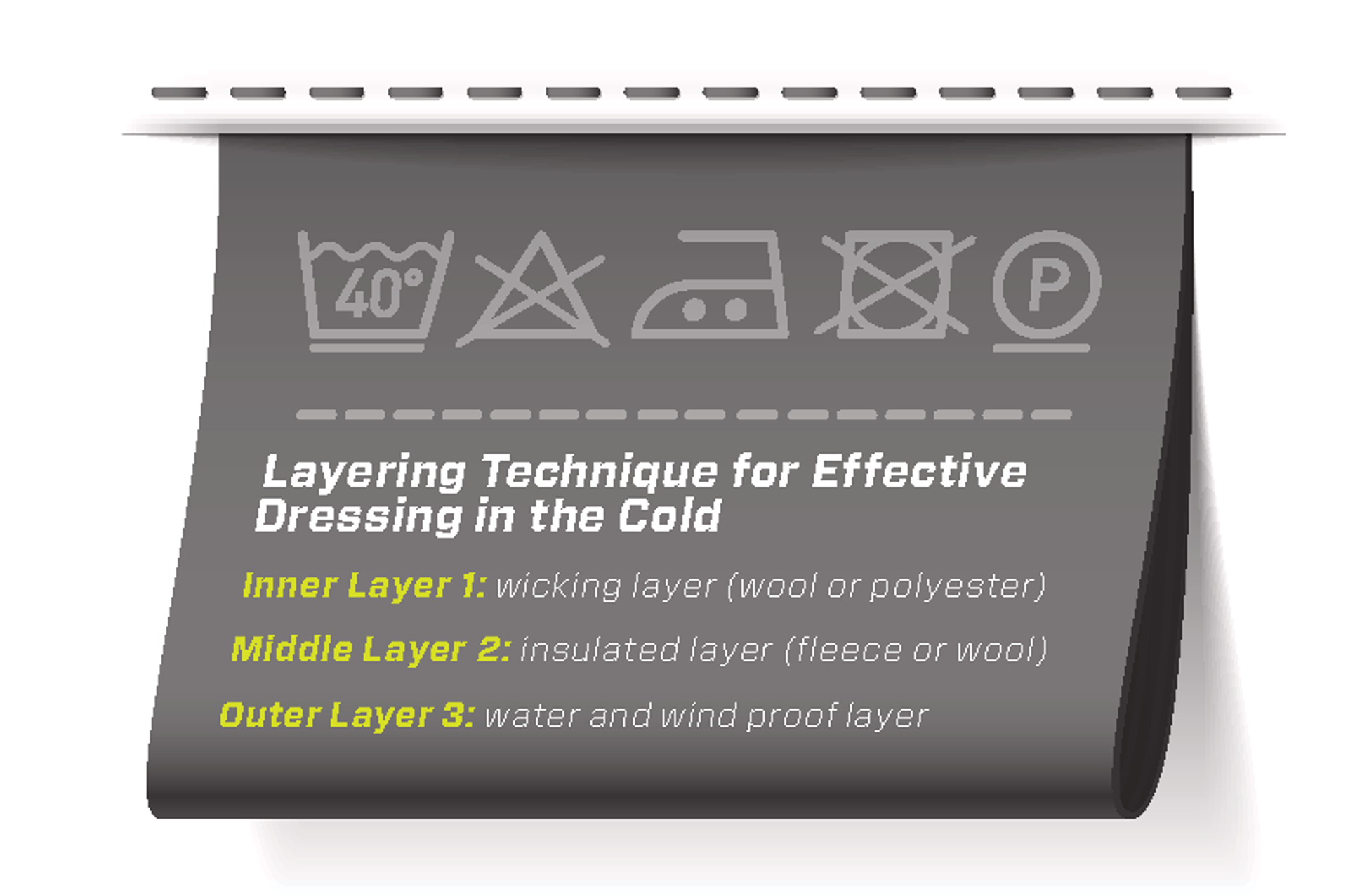
When temperatures drop and wind increases, the body loses heat more rapidly. It is important to dress appropriately when training or playing in cold weather. This also means to not overdress.
Layering clothing in a specific way is recommended and very effective. The layers can be added or removed based on body temperature and changing environmental conditions, such as temperature and wind. Allow players to wear additional clothing, like gloves, sweatshirts, sweat pants and/or hats or headbands. Also, avoid sweating before going outside because your body will cool too quickly.
Wind Chill
Pay attention to the wind chill temperature (WCT) Index (see chart). Even prolonged exposure in relatively mild temperatures can lead to frostbite. The National Weather Service wind chill chart can serve as a guide to safe play in cold weather.
Stay Dry
Wet and damp conditions add to the risk of injury or illness during cold weather. Players, coaches and referees should recognize these factors and use additional caution to watch for potential cold injuries.
If players do get wet during training or play, remove wet or saturated clothing and replace it with dry clothing. This becomes more important if the individual will remain out of play or anticipates standing around for a prolonged period of time. A hat, gloves and extra pair of socks can also keep extremities dry in case of snow or rain.
Stay Hydrated
Cold weather often reduces our ability to recognize that we are becoming dehydrated. If you are thirsty, you have already become dehydrated. Try putting warm or hot water in a water bottle so that your water doesn’t freeze when training for extended amounts of time outside.
Take Action
If someone is suffering from a cold-related illness, get him or her into a warm location as soon as possible. Identify a nearby warming location before the start of training or play.
During games, provide blankets or other items for players to stay warm while they are on the bench and allow additional substitutions or warming breaks.
COMMON COLD-RELATED ILLNESSES
Frostbite
Frostbite is what happens when skin and tissue actually begins freezing. It can cause numbness, tingling or stinging in the affected area. The skin may also lose its natural color, turning pale or bluish. Frostbite can permanently damage body tissue, leading to the loss of an extremity in severe cases.
The most commonly affected areas for frostbite include: nose, ears, cheeks, chin, fingers and toes. Use body heat or warm (but not hot) water to begin warming the affected area.
Recognize:
- Swelling/Edema
- Redness or mottled gray skin appearance
- Tingling or burning
- Blisters
- Numbness or loss of sensation
Recover: Gradually rewarm affected area with warm water
Warning:
- Do not rub or massage the frostbitten area. This may actually increase the damage.
- Do not use heating pads, heat lamps or the heat of a stove, fireplace, or radiator for warming since affected areas are numb and can be easily burned.
- f any of the symptoms persist for longer than a few hours, seek medical attention from emergency department or physician.
Hypothermia
Hypothermia is the result of your internal body temperature dropping to 95 degrees Fahrenheit (35 degrees Celsius) or less. It can be fatal if not detected promptly and treated properly.
Hypothermia typically begins with feelings of intense cold, shivering and behavior which are more quiet and disengaged than normal. As the condition worsens, the individual seems confused, sleepy and may begin slurring speech. To begin treating hypothermia, start by warming the center of the individual’s body first. Make sure they are dry and cover them with layers of blankets, clothing, towels or whatever else is around to contain their body heat. Warm nonalcoholic beverages may also help increase body temperature. If hypothermia is suspected, get the on-site medical provider or call 911.
Recognize:
- Shivering vigorously or suddenly not shivering
- Increased blood pressure
- Lethargy
- Impaired mental function
- Slurred speech
Recover:
- Remove damp/wet clothing
- Apply heat to the trunk of the body, not limbs
- Provide warm fluids and food
Warning:
- Avoid applying friction massage to tissues
- Do not use a hot shower or bath to treat hypothermia because it could cause the individual to go into shock.
- If symptoms persist seek medical attention from a physician or Emergency department.
STEP 1 - Determine Wind Chill Temperature
The effects of cold weather can impact health and safety during practices and games. The definition of “cold stress” varies across the United States, depending on how accustomed people are to cold weather. A player from Minnesota will have a much different threshold for cold than a player from Florida.
STEP 2 - Find Your Alert Level
Use this chart below to determine the alert level at your location based on the wind chill temperature.
Lightning and Thunder
Lightning is one of the top ten causes of sudden death in sport.1 As the majority of soccer is played outdoors, lightning and severe weather pose a threat to player health and safety. When it comes to making decisions to suspend or cancel play due to weather condition, coaches, officials, athletic trainers and administrators all share responsibility. These same individuals should be aware of close safe shelter locations and know how to evaluate when it is safe to resume play after severe weather leaves an area.
DC Soccer Club Policy
Lightning and severe weather pose a threat to player health and safety. According to the National Weather Service (NWS), there is no safe place outside when thunderstorms are in the area, and if you hear thunder, you are likely within striking distance of the storm. In consideration of this advice, DC Soccer Club policy is as follows:
If a coach, manager, parent/guardian, athlete, or other individual sees lightning, or hears thunder, that person shall immediately notify the coach, and the
coach is required to:
- Immediately suspend the outdoor activity
- Direct all players to seek a safe shelter* location for at least 30 minutes from the last time lighting is seen or thunder is heard.
Coaches and managers should download the free WeatherBug App lightning detector app, which may help track when lighting might be near. Anytime the app denotes lightning within ten (10) miles, all outdoor activities should cease immediately.
Safe Shelter
According to the NWS, safe shelter is either a substantial building (one with plumbing and wiring such as a home, school, church, office building, indoor concourse or recreation center) or a fully enclosed metal-topped vehicle such as a hard-topped car, minivan, bus, etc. Unfortunately, many of the fields used by DC Soccer Club do not have access to substantial buildings for safe shelter. Therefore, while DC Soccer Club coaches, managers, and management have the best intentions for the safety of our players, parents/guardians are reminded that they are ultimately responsible for ensuring players have access to a safe vehicle during outdoor activities.
Parents/guardians should ensure that a responsible person with a safe vehicle remains at the field if/when there is a risk of severe weather forming.
When temperatures drop and wind increases, the body loses heat more rapidly. It is important to dress appropriately when training or playing in cold weather. This also means to not overdress.
Layering clothing in a specific way is recommended and very effective. The layers can be added or removed based on body temperature and changing environmental conditions, such as temperature and wind. Allow players to wear additional clothing, like gloves, sweatshirts, sweat pants and/or hats or headbands. Also, avoid sweating before going outside because your body will cool too quickly.
Wind Chill Temperature Index
Step One - Determine Wind Chill Temperature
The effects of cold weather can impact health and safety during practices and games. The definition of “cold stress” varies across the United States, depending on how accustomed people are to cold weather. A player from Minnesota will have a much different threshold for cold than a player from Florida.
Find Your Alert Level
Step Two - Find Your Alert Level
Use this chart below to determine the alert level at your location based on the wind chill temperature.
Lightning and Severe Weather
Heat-related illnesses, such as heat stroke and heat exhaustion can be serious and potentially life-threatening conditions. US Soccer prepared this guide for coaches, referees and players for training or playing in colder climates. Additionally, it serves as a guide for games and player safety during extreme temperature conditions. The information provided is not a substitute for medical or professional care, and you should not use the information in place of a visit, consultation or the advice of your physician or other healthcare provider. For specific questions and concerns, please consult your health care provider or physician.
Heat-related illnesses, such as heat exhaustion and exertional heat stroke (EHS), can be serious and potentially life-threatening conditions which can be brought on or intensified by physical activity.
Recognizing the signs and symptoms as early as possible allows for treatment and rapid recovery with hydration and cooling down the individual.
- Early signs and symptoms of heat illness include weakness or fatigue, headache, nausea and dizziness
- Altered mental status, such as confusion, irritability, aggressive behavior, dizziness
- Slurred speech
- Hallucinations
- Loss of balance, falling down
- Throbbing headache
- Body temperature above 104 degrees Fahrenheit
- Complaining of chills, while skin may be warm to the touch Preventing heat related illness is the best medicine.
It may become important to adjust training, match play and hydration breaks when playing in warmer climates and during extreme temperature conditions.
- Frequently monitor environmental conditions using Wet Bulb Globe Temperature (WBGT) device or Heat Index and make practice modifications (e.g., increase in the number and duration of hydration breaks, shortening practice, postponing practice/competition until cooler parts of the day)
- Follow heat acclimatization guidelines
- Ensure appropriate hydration policies are in place with athletes having unlimited access to water during practice and competition, especially in warm climates.
Dress for the Cold
When temperatures drop and wind increases, the body loses heat more rapidly. It is important to dress appropriately when training or playing in cold weather. This also means to not overdress.
Layering clothing in a specific way is recommended and very effective. The layers can be added or removed based on body temperature and changing environmental conditions, such as temperature and wind. Allow players to wear additional clothing, like gloves, sweatshirts, sweat pants and/or hats or headbands. Also, avoid sweating before going outside because your body will cool too quickly.
Wind Chill Temperature Index
Step One - Determine Wind Chill Temperature
The effects of cold weather can impact health and safety during practices and games. The definition of “cold stress” varies across the United States, depending on how accustomed people are to cold weather. A player from Minnesota will have a much different threshold for cold than a player from Florida.
Find Your Alert Level
Step Two - Find Your Alert Level
Use this chart below to determine the alert level at your location based on the wind chill temperature.